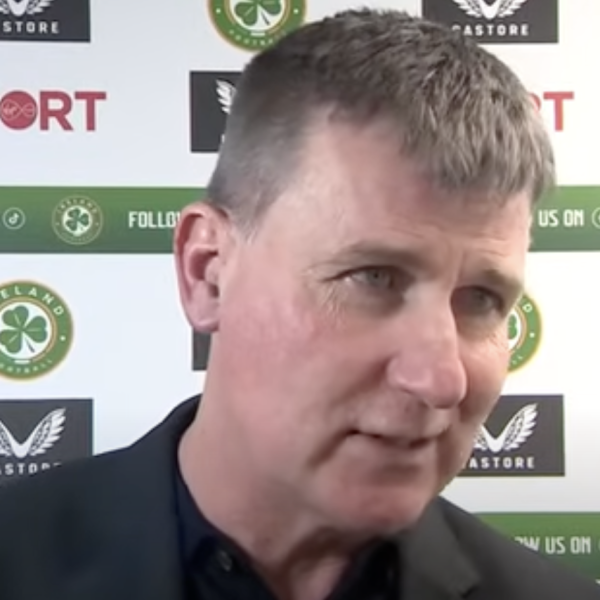
Shaun Maloney has been named as Martin O’Neill’s right-hand man as the duo look to steady the ship at Celtic before a permanent successor is appointed.
The former Celtic winger enjoyed two spells at the club as a player, where he made over 200 appearances, including lifting five league titles.
Maloney was an important player under O’Neill when the 73-year-old was in the Celtic dugout over 20 years ago.
In an unlikely twist of fate, the duo have been reunited at the Scottish giant under entirely different circumstances, and their first test comes against Falkirk on Wednesday night.
Assuming they’ll remain in charge for the weekend, a mouthwatering Scottish Cup semi-final against Rangers awaits.
The dynamic between the two and the roles they have will be highly intriguing.
When speaking about Maloney, O’Neill said: “Shaun and I go back years and years, when he was a young player with me.
“But he is experienced in management now and he’s worked with lots of really good coaches. I will obviously need help, and Shaun is there to give it to me.”
How will Shaun Maloney and Martin O’Neill work?
Football has obviously changed in the 20 years since O’Neill was last manager at Celtic. It has also been six years since he was last in a job when he managed Nottingham Forest.
It would make sense that while the final decision lies with O’Neill, he will lean heavily on Maloney to help provide a more modern input on tactics and formation.
Maloney is likely to lead sessions on the training ground and be heavily involved in providing a tactical nous, while O’Neill has plenty of experience in man management, helping instil belief after a difficult run of results.
“I took him to Aston Villa and he claimed he was homesick and came back to Celtic again. I’ve never really forgiven him for that!”
Martin O’Neill on his relationship with Shaun Maloney and how he sees their dynamic working.
— AVFC – The Religion (@AVFCTheReligion) October 29, 2025
What is Maloney’s win percentage as manager?
Maloney’s first experience as a coach came with Celtic when he worked with the club’s Under-20 development squad.
In 2018, he joined the coaching staff at Belgium under Roberto Martinez, where he eventually worked as assistant manager during the Euro 2020 tournament. They reached the quarter-finals, where they were knocked out by Italy.
In December 2021, Maloney stepped into management for the first time with Hibernian but endured a torrid time in the dugout.
He won his first two matches but then went on a run of one victory in 13 league games.
Maloney lasted 19 times in total before he was sacked, averaging just 1.26 points per game. In four months, he won six games in total, drawing six and losing seven.
Nine months later, Wigan made their move for former player Maloney to replace Kolo Toure. At the time, they were bottom of the Championship and four points adrift of safety.
Maloney failed to keep the Latics in the Championship but their season was shrouded by off-field issues that led to a three-point penalty from the EFL. They finished bottom, ten points away from safety.
Wigan finished 12th on their return to League One, having started the season on minus eight points. He lasted until March this year when he was axed following a run of one win in seven games, with the club languishing in 15th.
He averaged 1.41 points per game at Wigan, winning 42 out of 115 games.
Hibernian win percentage: 31.6%
Wigan win percentage: 36.5%
Interim Management team Shaun Maloney and Martin O’Neill pic.twitter.com/6UOgzN15m6
— Celtic Curio (@Celticcurio) October 28, 2025
What was Shaun Maloney’s style of play?
At Hibernian, Maloney was eager to play possession-based football while exciting supporters at the same time.
He adopted a 4-2-3-1 formation, but sometimes switched to a three at the back with wing-backs depending on the opponent. That has remained consistent throughout his managerial career, adopting a similar approach at Wigan.
When he was appointed manager of Hibs, Maloney cited Martinez as somebody who inspired him with tactics.
He said: “Roberto Martinez was a big influence on me at that stage in my career and more recently in the last few years with Belgium. That influence has given me a deep desire to create a different style in Scotland.”
His tactics also included higher possession, use of width, and stretching the opposition instead of just keeping the ball.
He failed to find a winning formula in Scotland with suggestions he tried to change too much, too soon.
Maloney was reluctant to change his approach at Wigan, where they tried to transition from prior long-ball, more direct traditions to a style where midfielders and fullbacks played more involved roles, rotated positions to create overloads and moved the ball with purpose.
While there were glimpses of his capabilities and style of play, it’s worth noting that Wigan were hamstrung by financial difficulties, which prevented him from building a squad more suited to his tactics.
Categories
- Athletics (5)
- Aussie Rules (1)
- Basketball (12)
- Camogie (3)
- College American football (1)
- Combat (185)
- Cricket (17)
- Cycling (4)
- Darts (36)
- Editors-picks (13)
- Football (1210)
- Formula-1 (14)
- GAA (308)
- Golf (162)
- Hockey (1)
- Horse Racing (172)
- interviews (3)
- LGFA (3)
- MLB Baseball (2)
- NFL (23)
- ROI Radar (1)
- Rowing (1)
- Rugby (188)
- Snooker (6)
- Swimming (3)
- Tennis (17)
- Uncategorized (17)
- WWE (1)